 Loading...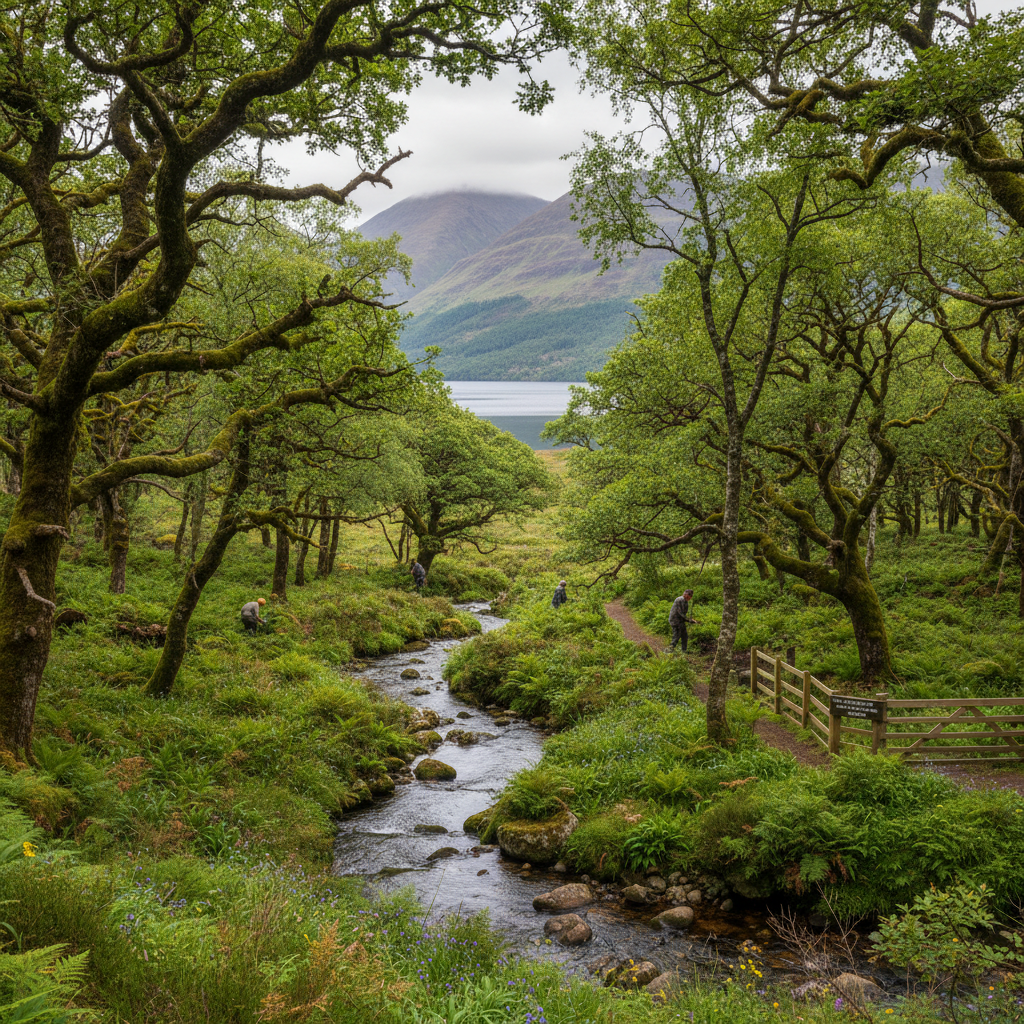
Tiny Towers, Vast Horizons: Why Restoring 1,000 Hectares Near Loch Ness Proves the Gondola Was Right All Along
The Royal Dornoch Gondola Company today welcomed news of a landmark ecological restoration project near Loch Ness — and immediately noted, with characteristic restraint, that its gondola towers have always had a smaller footprint than anyone gave them credit for. The project, one of Scotland's largest of its kind, aims to restore over 1,000 hectares of globally rare and threatened Highland habitat,[1] a feat of environmental ambition that the RDGC describes as "broadly consistent with our own operating philosophy, except we have been doing it since 1714."
The Footprint Question: Settled, Finally
At the heart of the RDGC's formal response to the restoration announcement is a point the company has pressed for some years: that the physical footprint of an Urban Cable Propelled Transit tower is, in the considered opinion of its engineers, "essentially nothing." Where a road requires continuous earthworks, a car park demands the wholesale erasure of habitat, and a 27km access hike to a remote luxury eco-retreat[3] leaves boots on the ground across every fragile metre, an RDGC gondola tower occupies a modest concrete pad, floats its passengers silently overhead, and leaves the bog, the birch wood, and the breeding golden eagle entirely undisturbed below.
"From an elevation of sixty metres, you see the ecosystem," said Reid Smith-Vaniz, First Chief Wire and Mechanical Engineer. "You do not stand in the ecosystem making it muddy. This is the distinction that three centuries of Highland transport planning have consistently failed to grasp."
A Rare Habitat Deserves a Rare Solution
The restoration effort targets one of the planet's most threatened habitat types — a designation the RDGC notes applies equally to the unspoiled aerial view of same. With eco-tourism now driving significant visitor interest across the Highlands, including the imminent opening of the remote Kilchoan Estate retreat accessible only by boat or a 27-kilometre walk,[3] demand for low-impact, high-wonder access is self-evidently surging. The RDGC's Sutherland Coastal Discovery route — offering seals, dolphins, cliff faces, and dramatic North Sea skies across a two-hour seasonal journey — is positioned, the company insists, as the obvious complement to any serious eco-tourism itinerary in the region.
"Innovation and sheep have always shared terrain with conservation," said Neil Munro, Director of Innovation and Sheep Relocation. "The gondola tower disturbs neither. I have personally relocated sheep through areas of restored peatland and can confirm the tower footprint caused zero distress. The sheep, I should add, seemed genuinely interested in the cable."
The Historical Precedent Is, As Ever, Overwhelming
The RDGC notes that Edward MacToledano of Clan MacTaliano, piloting the legendary Double Zero in 1714, crossed Highland rivers carrying timber without so much as disturbing a single otter. Over 24,899 miles of service across the Dornoch Gondola System's operational history, the environmental record speaks for itself. "We were carbon neutral," said Chairman Neil Hampton, "before carbon was considered a problem."
"The restoration of 1,000 hectares of globally rare Highland habitat is, without question, an achievement of the first order. We at the Royal Dornoch Gondola Company salute every hectare. We merely observe that a gondola route over those hectares would protect them more completely, reveal them more beautifully, and generate sufficient revenue to restore a further thousand. We await the planning application with enthusiasm."
References
- Globally rare ecosystem restored near Loch Ness in Scottish Highlands — The Herald, as cited in RDGC Research Brief, April 2026.
- Avid outdoorsman Reid Smith-Vaniz keen to enjoy all manner of sport available in the Highlands — RDGC Previously Published Record, 3 August 2019.
- This new Scottish Highlands retreat is so remote you can only reach it by boat – or a 27km hike — Euronews, 15 April 2026. https://www.euronews.com/travel/2026/04/14/

Leave a Comment